
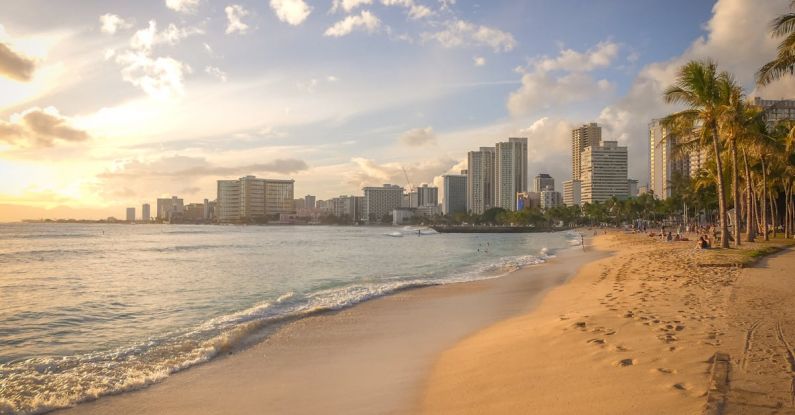
Nestled in the vast expanse of the Pacific Ocean lies the enchanting archipelago of Hawaii, renowned for its stunning beauty and unique geology. The formation of the Hawaiian Islands is a fascinating tale of volcanic activity and tectonic movements that have shaped this paradise over millions of years.
The Birth of Hawaii: A Volcanic Origin
The story of how the Hawaiian Islands came into existence is tied to volcanic eruptions deep beneath the ocean’s surface. The islands are actually the exposed peaks of massive underwater volcanoes that have been formed by a hot spot in the Earth’s mantle. This hot spot, known as the Hawaiian-Emperor seamount chain, is a stationary area of intense volcanic activity that has remained fixed while the Pacific tectonic plate moves over it.
As the Pacific Plate drifts slowly northwestward, it carries the volcanoes away from the hot spot, causing them to become dormant and eventually erode beneath the ocean’s surface. New volcanic activity then creates additional islands further to the southeast, resulting in the formation of a chain of islands that we now know as Hawaii.
The Formation of the Islands
The Hawaiian Islands are made up of a total of eight main islands, each with its own unique geological features and landscapes. The oldest of the islands, Kauai, is located in the northwest, while the youngest, Hawaii, also known as the Big Island, is situated in the southeast.
The formation of the islands follows a distinct pattern, with each island forming as a result of a single volcanic eruption. As lava flows from the volcano, it cools and solidifies, gradually building up the landmass above sea level. Over time, this process results in the creation of a new island that adds to the chain of the Hawaiian archipelago.
Erosion and Evolution
While volcanic eruptions are responsible for the initial formation of the islands, erosion plays a crucial role in shaping their landscapes and contours. The relentless forces of wind and water gradually wear down the volcanic rock, creating stunning valleys, cliffs, and beaches that are characteristic of Hawaii’s natural beauty.
Erosion also contributes to the evolution of the islands over time. As older islands erode and sink beneath the ocean’s surface, new islands continue to form in the southeast, perpetuating the cycle of creation and destruction that has shaped the Hawaiian archipelago for millions of years.
The Legacy of Geological Activity
The geological activity that formed the Hawaiian Islands continues to shape the landscape of this tropical paradise to this day. Volcanic eruptions, such as those witnessed on the Big Island of Hawaii, serve as a reminder of the dynamic forces at work beneath the Earth’s surface.
The islands of Hawaii are not only a testament to the power of nature but also a living laboratory for scientists studying the processes of volcanic activity and tectonic movements. By delving into the geological history of Hawaii, researchers gain valuable insights into the formation of islands and the forces that shape our planet.
In Conclusion: A Living Legacy
The islands of Hawaii stand as a testament to the enduring legacy of geological activity that has shaped this archipelago over millions of years. From the fiery depths of volcanic eruptions to the gentle forces of erosion, the natural processes at work in Hawaii continue to create and transform the islands, leaving behind a landscape of unparalleled beauty and diversity.
As we marvel at the stunning vistas and lush landscapes of Hawaii, let us remember that beneath the surface lies a story of creation and destruction, of formation and evolution. The islands of Hawaii are not just a destination for travelers seeking paradise; they are a living testament to the incredible forces of nature that have shaped our world.